Thursday, 1 May 2014

OUGD501: Context of Practice 2 - Website Research

____

Website research:

As I have decided that I am going to propose an interactive website I have carried out some research into websites that are already existing to gather some research and also inspiration for the layout of my website:

__

I visited awwwards.com and found these examples:

Interactive website to show how a grid works on a website:


__

The music bed:

Website that allows viewers to listen and watch videos of their favourite songs. 

The side navigation is one of the main features of this site that interested me. 


OUGD501: Context of Practice 2 - Daily Mail Article

A third of motorists are so clueless about road signs they don't even know what the national speed limit symbol is... so how will you get on?


  • Survey by car insurers More Than found widespread ignorance of signs

  • Of 2,000 drivers quizzed, many did not understand safety warnings

  • Many also didn't know speed limits - and ignored them when they did

  • Test yourself with our road sign quiz below


One in three drivers in so clueless when it comes to road signs that they cannot even recognise the symbol for the national speed limit, a survey claims.
A quarter of us are also unaware that blue motorway signs also explain the speed limit, while one in seven motorists mistakenly thought that 'slippery road' warning sign meant that the road had been freshly painted.
Eight per cent of drivers admitted they were baffled by the common 'road narrowing' sign, while almost a fifth said they did not know that when driving in a built-up area the speed limit is 30mph unless signs say otherwise.


The scale of ignorance was revealed in a survey of 2,000 drivers by car insurers More Than. The results also found that a 'worrying' proportion of drivers regularly ignore speed limits and drive as fast as they want to.
More than a third (36 per cent) said they disregard 30mph limits, travelling at an avergae of 38mph, while 32 per cent said they break 47mph limits, going 47mph on average instead.
On motorways, even more people admitted to ignoring the law, with 43 per cent breaking the 70mph in favour of an average speed of 81mph.
More Than spokesman Janet Connor said: 'This research shows there’s a worrying number of drivers for whom speeding is an acceptable everyday behaviour.
'Couple this with a shocking ignorance when it comes to the most common road signs, and you’ve got a recipe for road disaster.'
The large-scale confusion over road signs comes weeks after Transport Secretary Patrick McLoughlin called for hundreds of thousands of 'pointless' signs to be torn down.
Whatever could it be? A large proportion of drivers couldn't recognise this sign
‘Over the past two decades we’ve seen a huge rise in the number of unnecessary signs blotting the landscapes of our towns and cities’, he said.
‘Many of the signs that go up are simply not needed and it has got to stop. As well as spoiling otherwise beautiful areas of the country, pointless signs just confuse drivers and make the roads less safe.'
A spokesman for road safety charity Brake said: 'The research suggests a significant proportion of drivers seem to think it is okay to break the laws of the road.
'It can never be acceptable and we urge all drivers to respect road safety laws and recognise that such laws exist to help save lives.'
James Barter, from Southampton, Hants, admits struggling to identify some of the road signs - despite passing his test ten years ago.
The 28-year-old said: 'I passed my driving test when I was 18 and I still struggle to tell what certain signs mean.
'There are so many and some of the signs are not very clear or obvious.'


ANSWERS:
1) Cycle route ahead 2) Road narrowing 3) Slippery road 4) Dual carriageway ends
5) Uneven road  6) T-junction with priority over vehicles from the left 7) Tram crossing ahead
8) National speed limit 9) Start of motorway 10) Diversion route for motorway traffic

Wednesday, 30 April 2014

OUGD501: Context of Practice 2 - Practical (Primary Research Wayfinding)

____

Wayfinding:

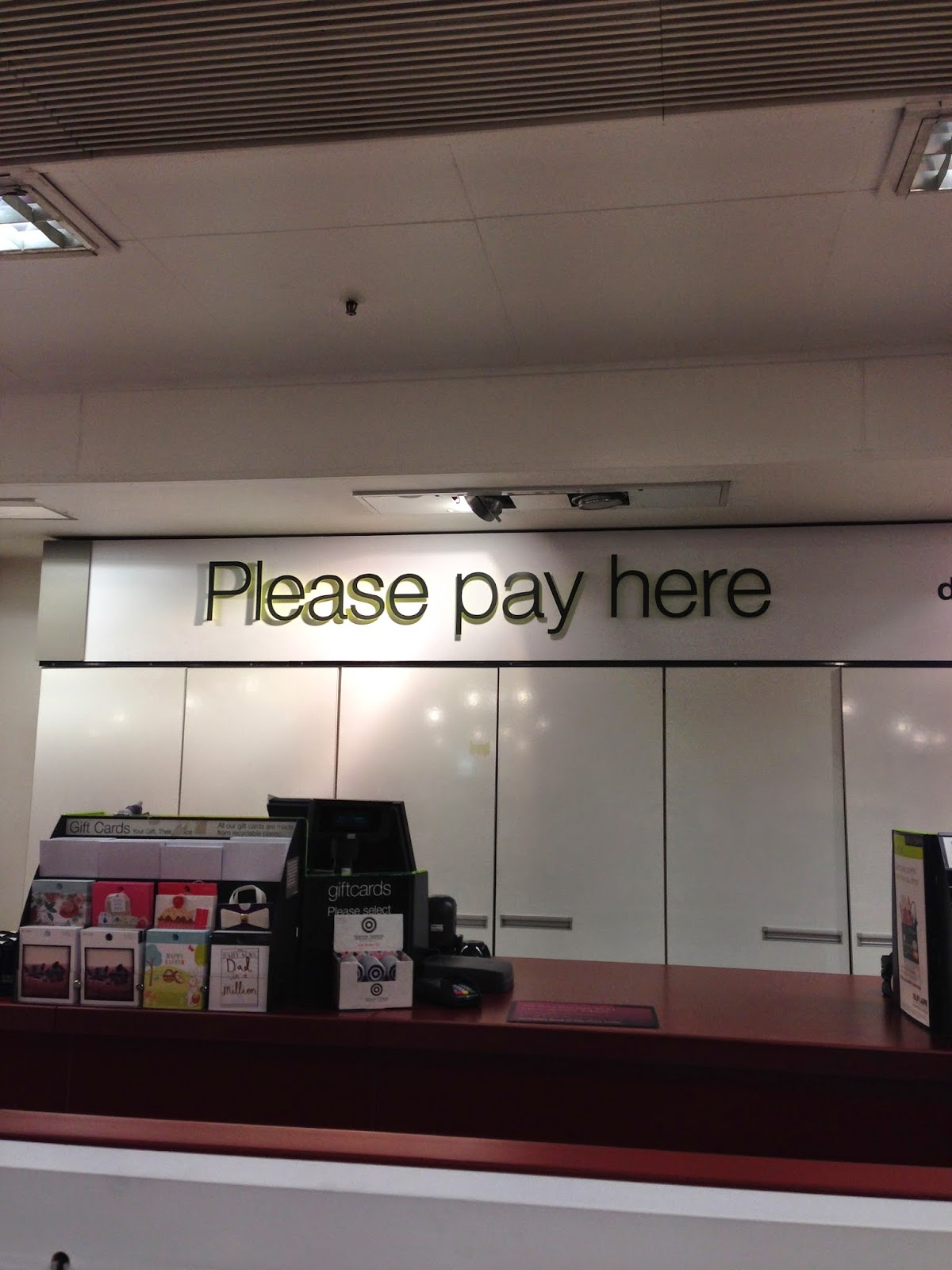
I looked at some other aspects of wayfinding whilst I have been out an about, some use both type and image whilst others use one or the other. Wayfinding in shops tend to use just type which is very interesting and something that I would like to explore in more detail in CoP3. 


Tuesday, 29 April 2014

OUGD501: Context of Practice 2 - Group Crit

_____

April 29th 2014

As we have not had any concept or progress crits for the Context of Practice 2 Practical a small group of us decided to get together and have one of our own. I did not have a lot of physical content to show but I did have ideas. I had been struggling with an idea for a long while so I found this crit very helpful.

___

My idea:

Create an Application and printed map for commuters in Leeds to find cafes with WiFi within a one mile radius of the train station. The map would play on augmented reality and allow people to hold their smart phone up and it will open in their maps area on their phones.

I know that I want to be able to test out the idea so to get an idea if it works. I am aware that this idea is not exact synthesis as my essay was a debate about whether type and image should work together in wayfinding.

I presented my ideas to the group and this was my feedback.

___

Feedback:

  • Not enough synthesis with my essay
  • How can you try it out?
  • Will you actually make the app?
  • Who are your target audience?
  • Would people not just google it?
  • Would you need WiFi to be able to use the app anyway?
This feedback was very helpful and enabled me to change my idea into something that I could merge into my CoP3 response. 


___

New concept:

Design an activity book and interactive website proving the key points of my essay in a visual way. Collect results from testing people on their knowledge and present them in an info-graphic as my final resolution.

I am very happy with the new concept and hope that it turns out to be successful.

OUGD501: Context of Practice 2 - Practical (Primary Research Symbols)

____

Signs and Symbols:

Whilst out and about in Leeds I have been taking photos of the different signs and symbols used to represent something and direct people to amenities. I wanted to do this to look at the similarities and differences between each symbol. 

__

M&S


__

Wagamama:


__

The Light Car Park:


__
Mijas Car Park - Spain, Malaga. August 2013.


__

Tesco


__

Leeds College of Art


__

Mrs Athas Leeds


____

I have found that all symbols are different depending on the place their are. For example, the M&S toilet signs are much more detailed than any other symbol, I think that this is a reflection on the target audience who will be looking at the sign. The specific placement of the sign was a toilet with a joint baby change unit in the children's section of M&S, a contrast is the symbol on the door of the toilet in the women's department, this is a clear example of how a symbol is changed depending on who will be viewing it. 

Mrs Athas cafe does not use a symbol to represent the different toilets, they use old photographs as their target audience would probably engage more with it. The car parks are very interesting because they use the same symbols, this is interesting because they are both several hundred miles away from each other, this links to Otto Neurath's plan to develop a global language that will be recognised internationally.