I found this documentary detailing the history of the London Underground. It is really interesting and informed me about a lot of things I do not know about the tube. I have looked at this specifically because I plan to create a video about the tube history for my website.
My Notes:
- Farringdon station was the first station to get an underground train
- The tracks are 630 volts
- Farringdon is prone to flooding due to it being built on the banks of a river
- 1850's London faced a problem of too much traffic
- A Law was passed during the boom time to stop stations being built in central areas. As a result of this the stations were built on the edges of London (Paddington, Euston, Kings Cross)
- With no access to the square mile the streets were full of people
- Charles Pearson who was the solicitor for London had concerns about the transport system
- With no transport in or out of the city workers were placed in slums, they dreamed of the countryside
- In 1845 Pearson had an idea to have trains underground
- He tried to make this happen for 8 years and was unsuccessful
- In 1863 he changed his tactics and the house of commons allowed the railway to be built
- This saw the formation of the Metropolitan railway group which was a private
- The building was a difficult process
- The first lines were built using the cut and cover method
- This process cleaned out the slums because they had to move them to build the tube
- This was a positive for the middle class but not so much for the lower class
- The line was formed from Paddington east to Farringdon
- Paddington - Euston - Kings Cross - Farringdon
- There were many options for the trains but the company chose the cheapest option - steam
- The prime minister was invited to the grand opening but declined
- They invited as many politicians and investors as they could to a banquet at Farringdon
- 9th 1863 the first ever train pulled away from Farringdon
- On the first day Farringdon had to close due to over crowding
- In its first year the tube was in such high demand that services were increased to every 10 mins
- The more trains meant more sulphur in the atmosphere
- They ran a PR campaign promoting steam and saying it was good for passengers health
- 1868 the District railway opened
- Rival companies joined and drew a circle around london in 1884
- The lines were all shallow due to the way they were built
- 1890 a revolutionary piece of equipment changed that
- The great head shield was a tunnelling machine pioneered by the Brunell family
- This machine meant it was able to dig through clay
- Labourers would crouch in the compartments and dig, this machine would then move along the tunnel which would increase in size
- 1890 the City and South London railway pioneered that machine digging the first tunnel under the river Thames from Stockwell to the city
- There are dozens of unused stations on the tube
- Some even have the old war posters on the walls
- More and more companies opening new lines
- Waterloo and City Line 1898, Central 1900
- Electricity drove the expansion of the tube
- Trains ran on electricity instead of steam
- Tiling patterns became very important in identifying stations
- People could not read and write in this time so they used the colours of the tiles to identify the stations
- Companies who had lines did not work together so a separate ticket needed to be bought to cross lines
- 1933 the London Transport was formed which brought all the companies together
- Design was made the same so that it was consistent
- This was a visionary design change
- The London underground is an international brand
- 1929 - 55 Broadway was built as the headquarters for the London Underground
- Frank Pick was the director at the time
- He went all out on the design of the tube
- The circle and cross logo has now been the logo since 1908
- There are rumours that it was stolen from the Paris tube
- Pick had ideas to boost sales and built 7 more stations which were overground lines. These gave easy access to the underground from various locations
- The tube created new suburbs and extended the London borders
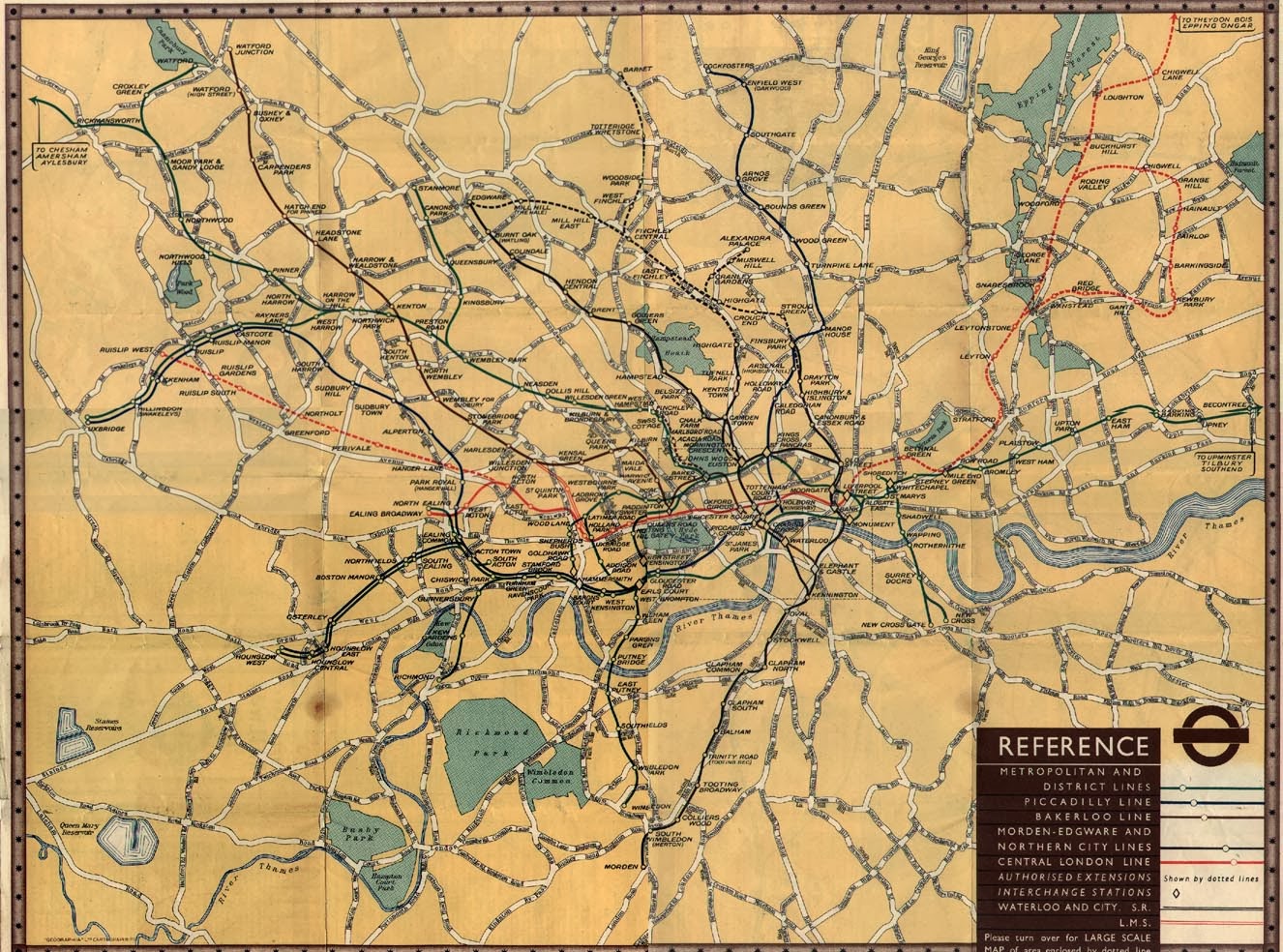
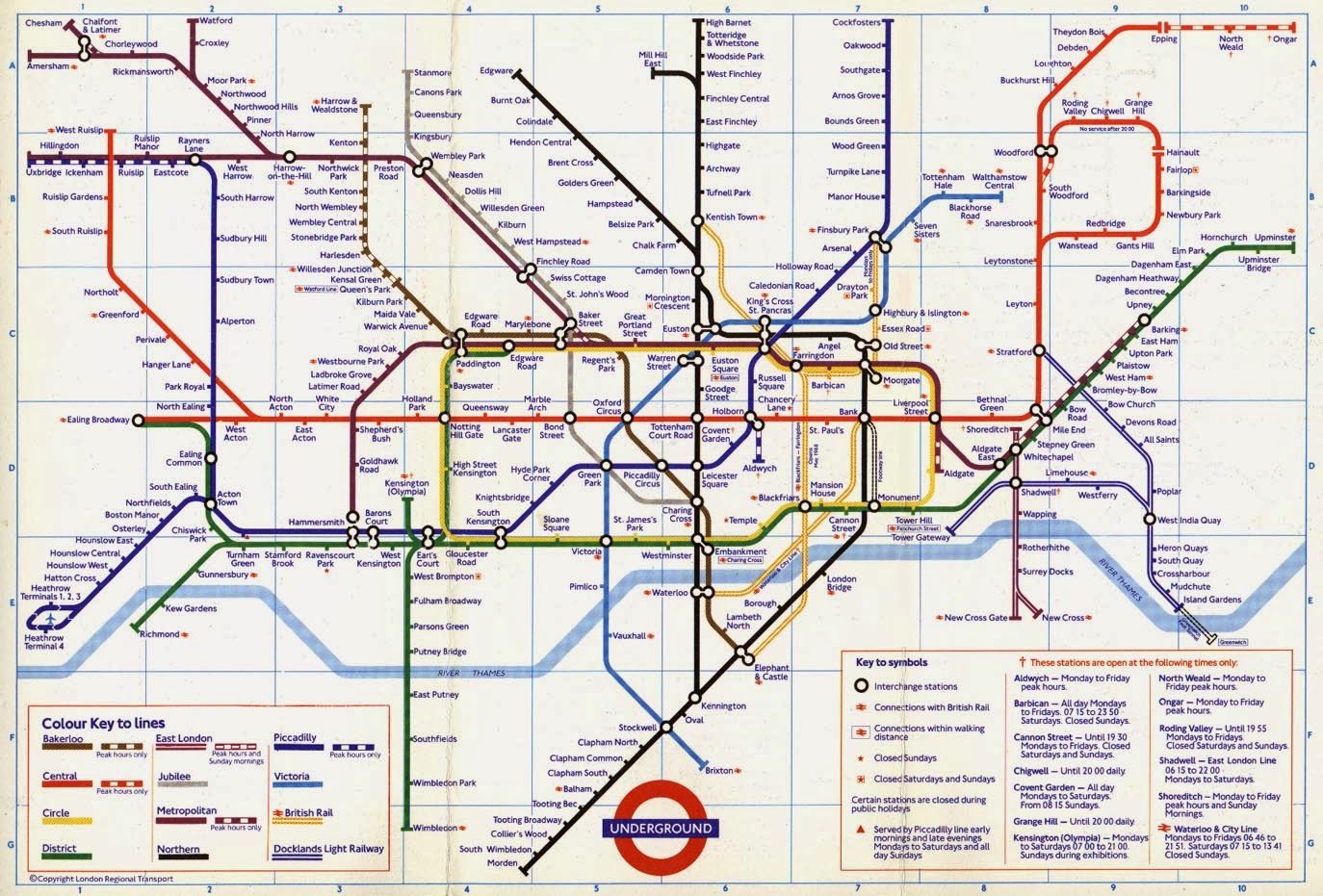
- The tube map was a complicated tangle of different lines
- Harry Beck who was a electrical draftsmen took it upon himself to design a new map
- He focused on the joins and where the lines clashed
- He made sure that every angle was either 45 degrees or 90 degrees
- Ken Garland was friends with him and has been left with the original design from Harry Beck. He called it amazingly elegant
- In 1932 Harry Beck was unemployed
- He sent the design to the underground the plan and it was rejected
- He went back and they eventually accepted it but wrote a note on the back asking for comments from the public about the design
- The public loved it and it went very quickly
- They printed a trial run in 4 stations and it was very popular
- The map was drafted by hand by Harry Beck
- 1950 disagreements were made by Harry and the TFL about geography
- 1960 Beck went to a station and was surprised when he was met by a version of his map which was signed by someone else
- He carried on sending maps in they were rejected
- 1997 he was credited on the map from then to present
- Map changes every 6 months
- Beck's design influenced metro system maps globally
- When the car became more popular the tube suffered
- 1956 they came up with a creative solution
- They recruited immigrants from Jamaica and Barcelona and put them up in hostels
- Racism became a problem and they were not allowed to stay in b&b's
- 1982 the numbers of passengers on the tube dropped 30%
- It became a source of inspiration for photographers
- 18th November 1987 at Kings Cross station there was a fire which killed 31 people. The heat was so intense that it melted the ticket machines
- The fire was caused by a cigarette which was stubbed out, this would not have been such a huge problem had the escalators been cleaned and were they not full of flammable liquids
- The tube is now undergoing a £1bn upgrade
- The oldest station (Farringdon) will soon become the newest
- It is predicted that in 2018 Farringdon will have 150 trains per hour